
AI in Higher Education
Global Survey 2026
A comprehensive look at AI in higher education, drawing on 45,398 responses—including 27,284 from students and 18,114 from faculty—across 35 countries. It presents one of the largest and most geographically diverse datasets on AI adoption in higher education assembled to date.

Key Insights
Students See Benefits From AI, but Also Early Signs of Skills Erosion
While AI capability evolves rapidly, the structure of tasks remains stable. This underlying structure helps predict how AI will ultimately be integrated into work.
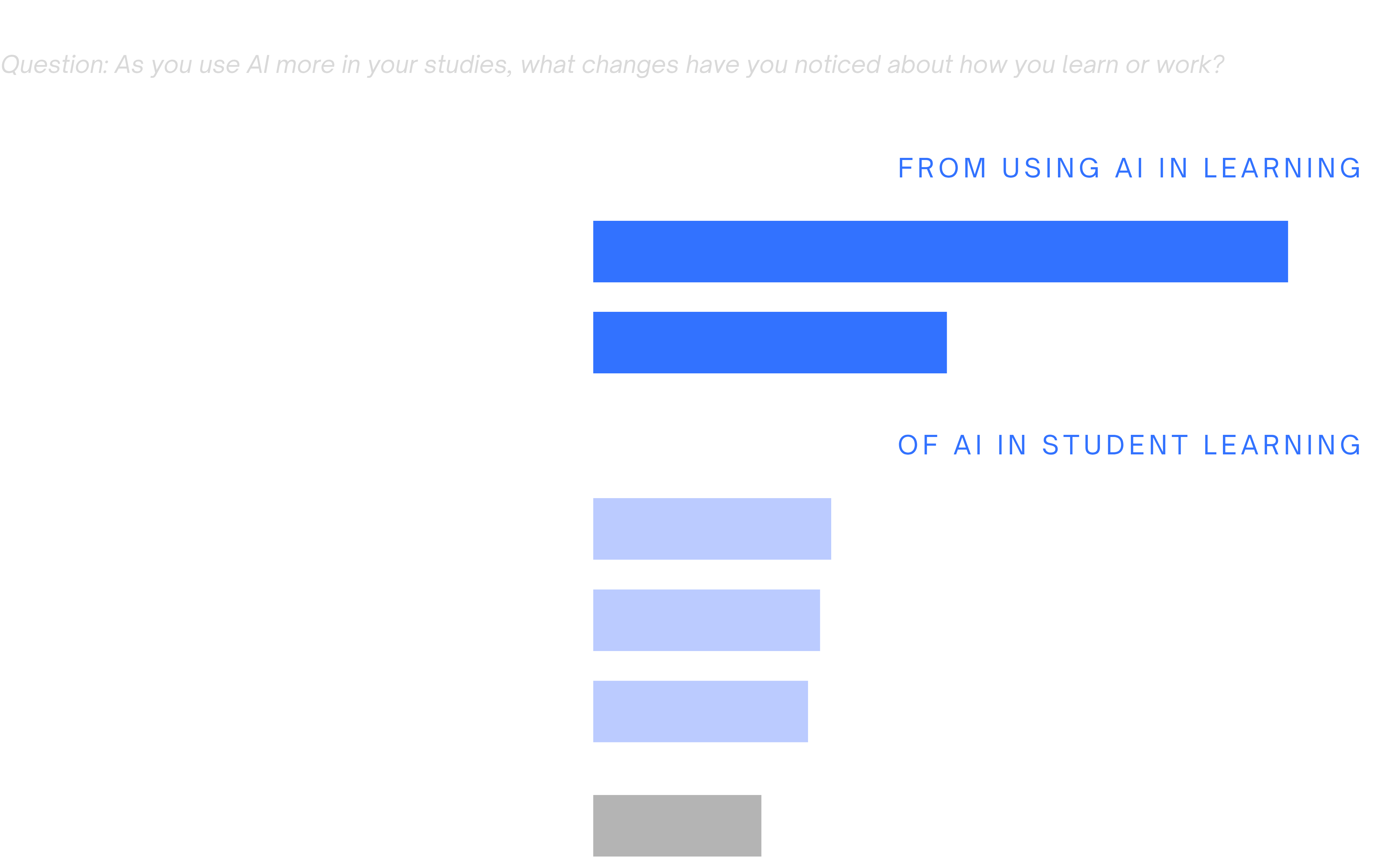
AI Is Entering the Classroom, but Its Learning Value Remains Unclear
AI is entering some courses, but the integration is uneven. Only 15% of students say AI is integrated into many of their courses, while 43% say it appears in a few. Another 43% say they have not experienced any AI integration in their courses.
Where AI is integrated, its value is still mixed. Among students who have experienced AI use in their courses, only 5% say it has transformed how they learn. A further 28% say it enhances their understanding and learning outcomes.
For most students, however, the impact is more limited. 42% say AI integration has been only somewhat helpful. Another 24% say AI has brought no clear learning value and feel AI integration is mostly just novel rather than useful. Students in the US & Canada report the most limited benefit, with 42% saying AI integration has not added clear value to their learning.
.png)
Students Question Faculty AI Readiness
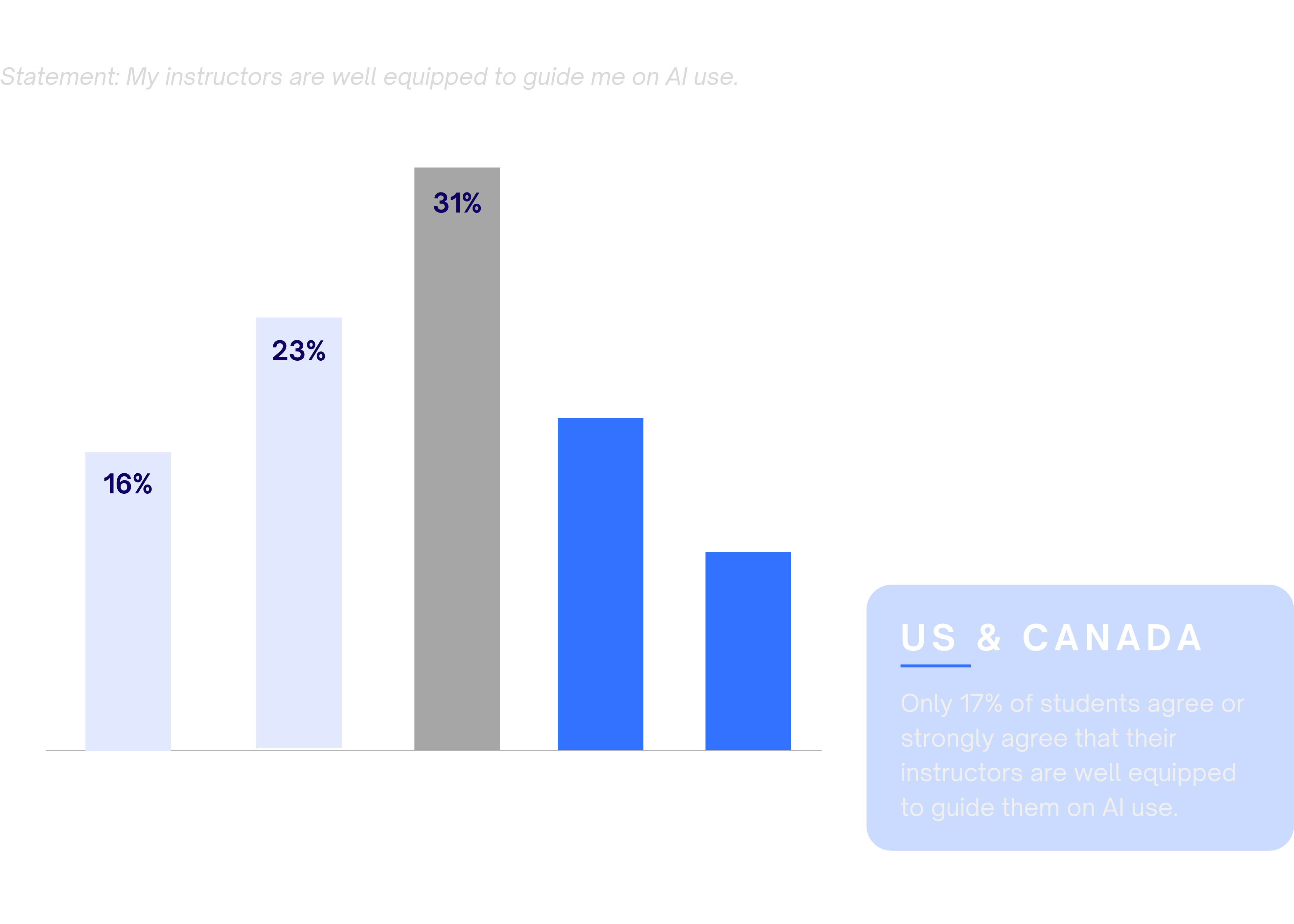
Only 29% of students believe their instructors are well equipped to guide them on AI use. In the US & Canada, this number is considerably lower at 17%. The gap is especially notable given that 64% of faculty say they have participated in AI literacy training.
An Early Picture of Global AI Literacy
Students and faculty remain at an early stage of AI literacy, with most respondents at beginner to intermediate levels.Literacy profiles are broadly consistent across regions, with students and faculty showing similar levels of AI literacy
proficiency globally.
.png)
Faculty AI Adoption Intent Remains High Globally, but Has Declined in US & Canada
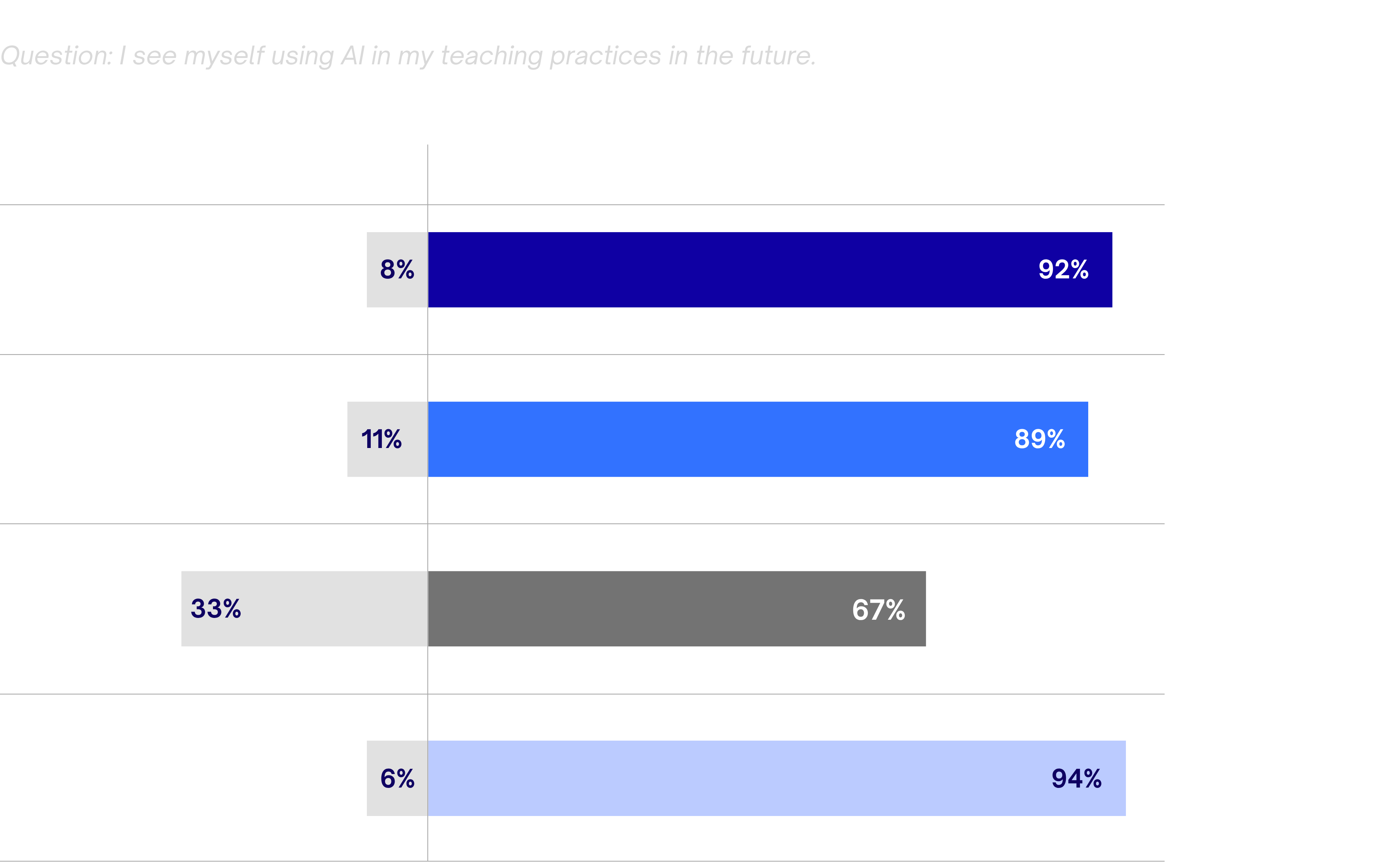
A majority of faculty in APAC, EMEA, and Latin America continue to see themselves using AI in their teaching in the future. This has remained largely unchanged from 2025.
The US & Canada, however, shows a different pattern. Faculty intent to use AI has declined by 9 percentage points, from 76% in 2025 to 67% in 2026. This leaves the region with the lowest future AI adoption intent among all regions.
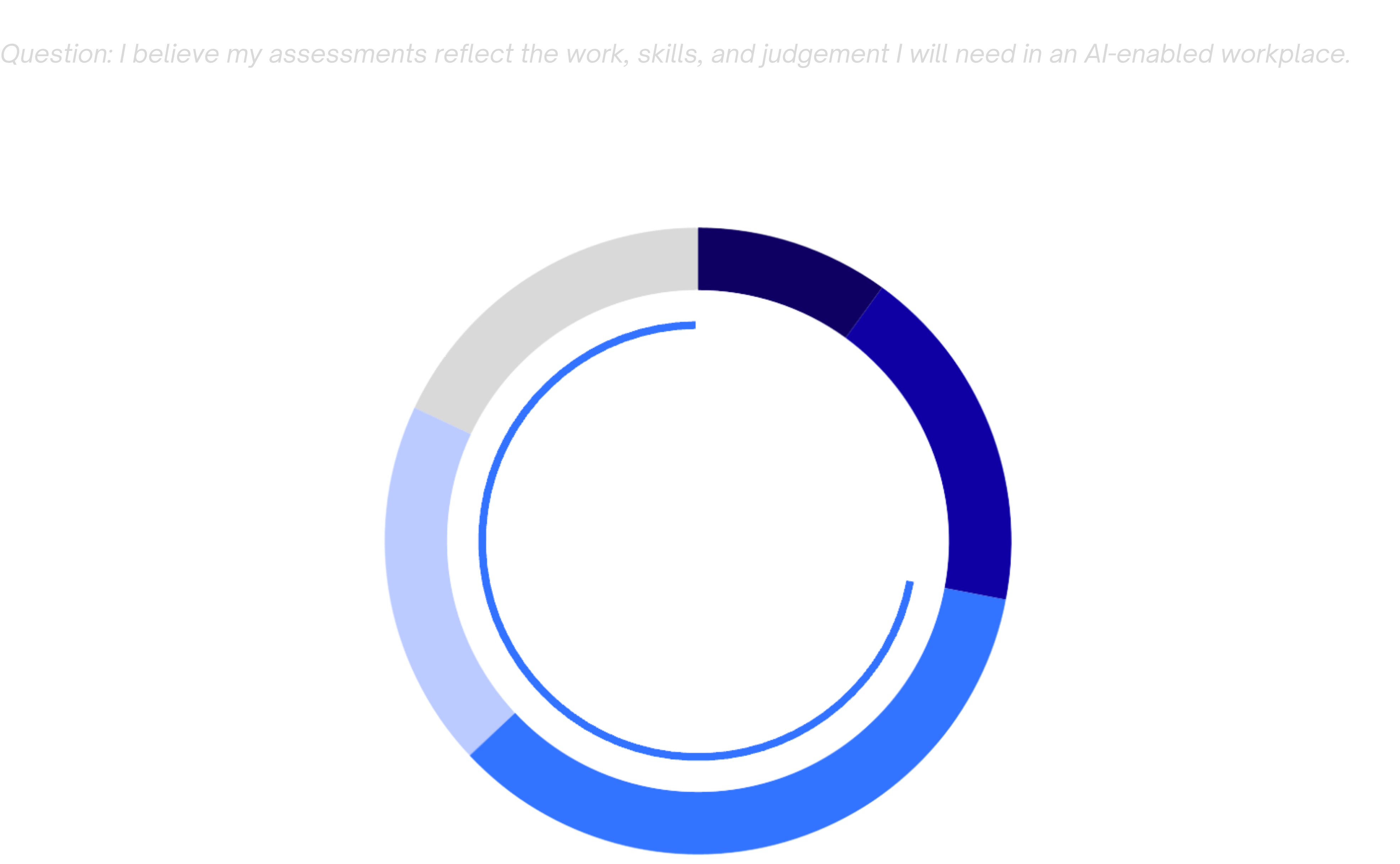
Students Question Whether Assessments Align With Future Workforce Needs
Only 28% of students feel that most or many of their assessments reflect the work, skills, and judgement they expect to need in an AI-enabled workplace. The remaining 72% do not see this alignment consistently across their assessments. This includes 35% who say only some assessments reflect future workplace needs, and 37% who say none or only a few do so.
Students Are Worried About Unfair AI Use Among Peers
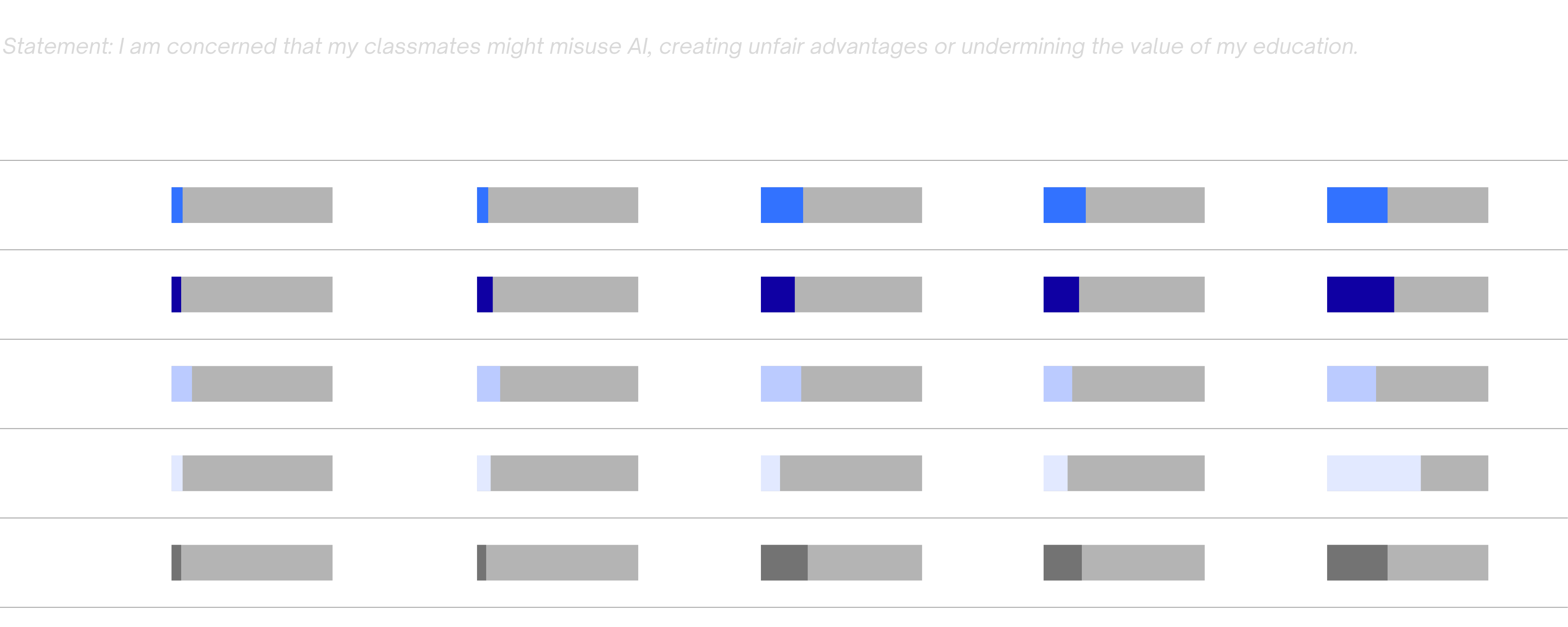
60% of students globally worry that their classmates might misuse AI for unfair advantage, rising to 73% in US & Canada. This suggests that the challenge is not only whether students are using AI, but whether they trust the conditions under which others are using it.
APAC Sees AI’s Promise, While US & Canada Worry About Its Risks
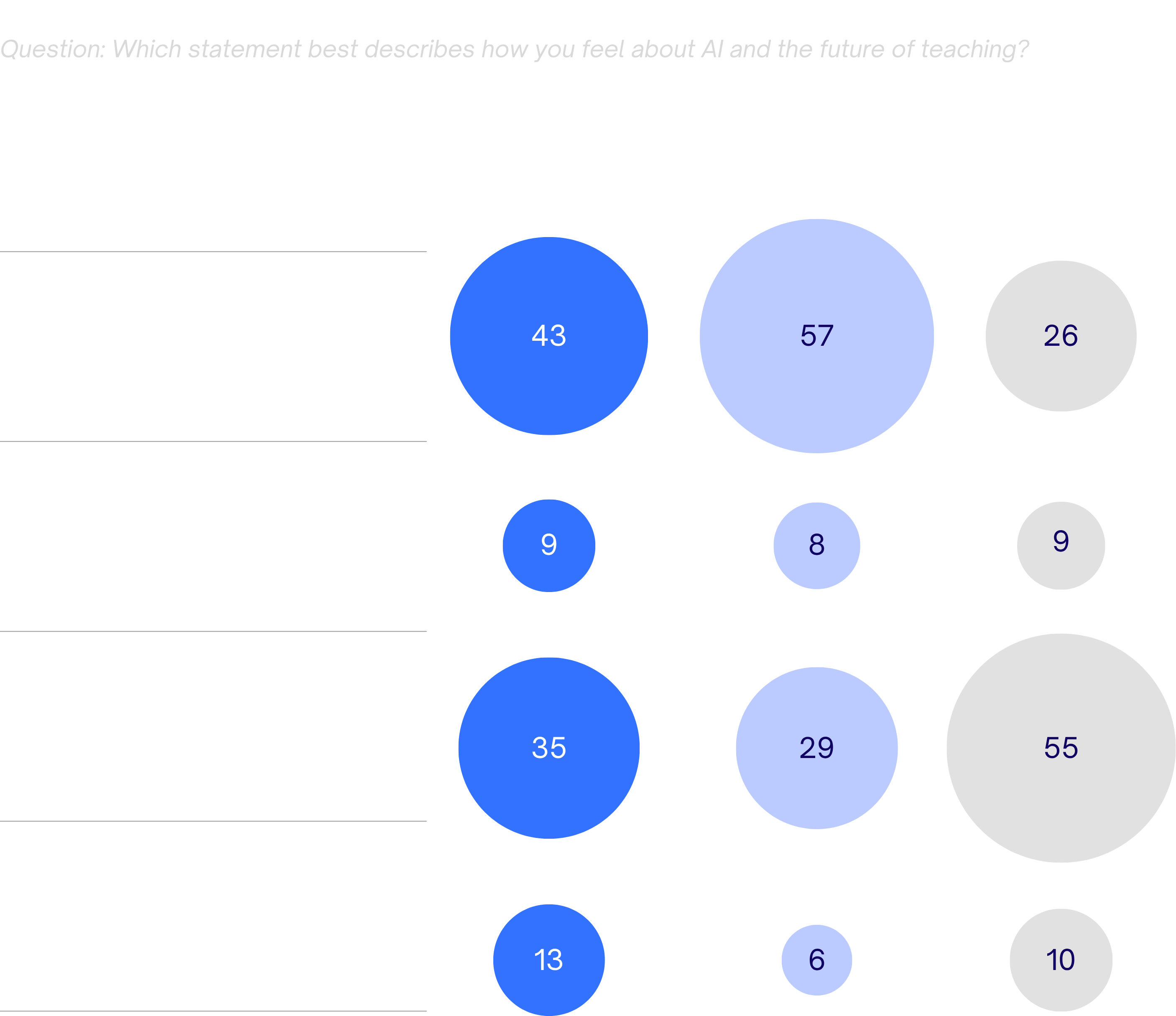
Faculty views on AI and the future of teaching diverge sharply by region. APAC faculty are the most optimistic: 57% say they are excited about AI and believe it can make learning more effective and accessible. In the US & Canada, only 26% share this view.
The reverse pattern appears in concerns about intellectual development. In the US & Canada, 55% of faculty believe AI poses a serious risk to human intellectual development. In APAC, only 29% hold the same concern. This more cautious outlook may help explain why faculty in the US & Canada report lower intent to use AI in teaching than their peers in other regions.Students in the US & Canada show similar caution. 43% say they would support an institution-wide ban on AI.
Students Worry AI Will Reduce Job Opportunities, With STEM Students Most Worried
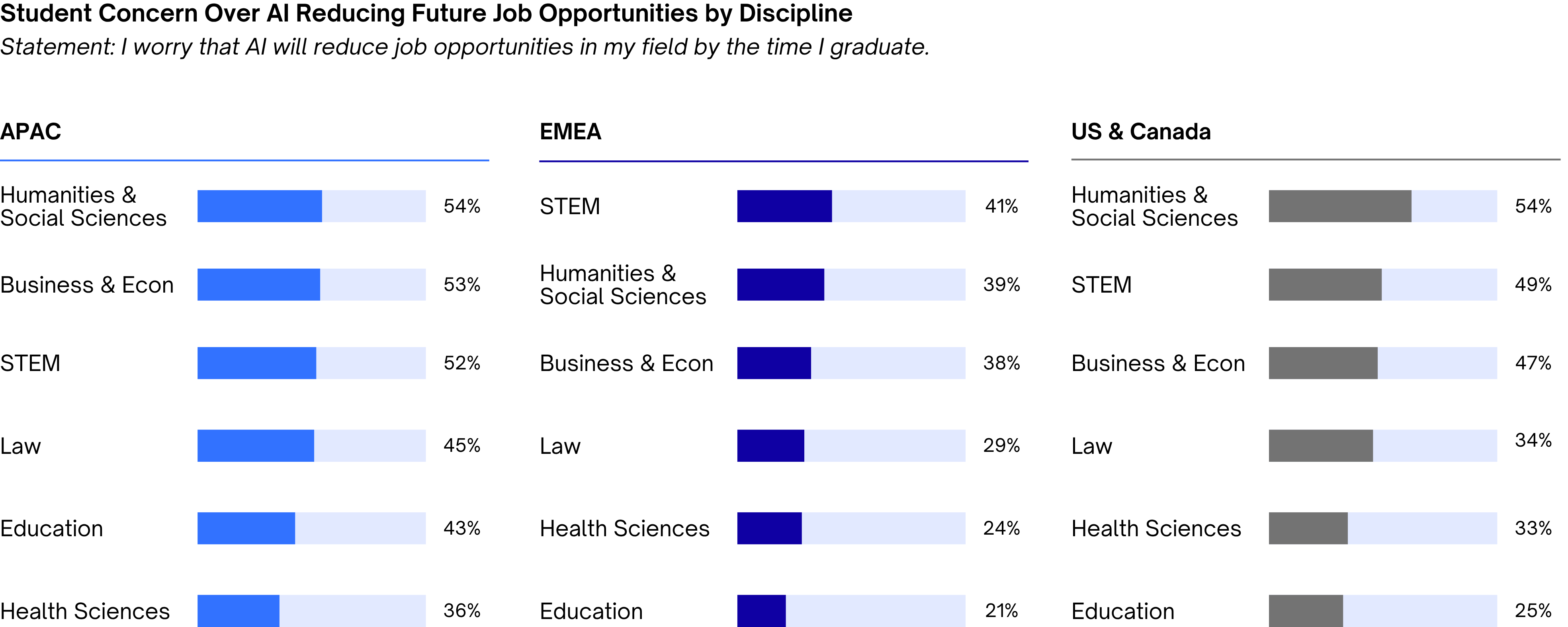
Globally, 41% of students worry that AI will reduce job opportunities in their field by the time they graduate. This anxiety peaks in APAC, where 50% of students anticipate a shrinking job market.
This concern varies by discipline and region. In APAC, concern is high across several disciplines, including Humanities and Social Sciences (54%), Business and Economics (53%) and STEM (51%). In the US & Canada, concern is highest among Humanities and Social Sciences students, at 52%.
EMEA shows lower concern overall with STEM students reporting the highest, at 41%, while Education students report the lowest, at 21%.
Students See a Curriculum Relevance Gap, but Faculty Are Less Worried
Students are questioning whether their programmes are keeping pace with AI. 37% express serious doubts about whether their programme is relevant for AI and the future, while only 30% agree that their programme feels current. Confidence is even lower in the US & Canada, at just 19%.
Employers appear to share this concern. According to DEC’s 2025 AI in the Workplace Report, 80% of employers said higher education is not keeping up with industry change.
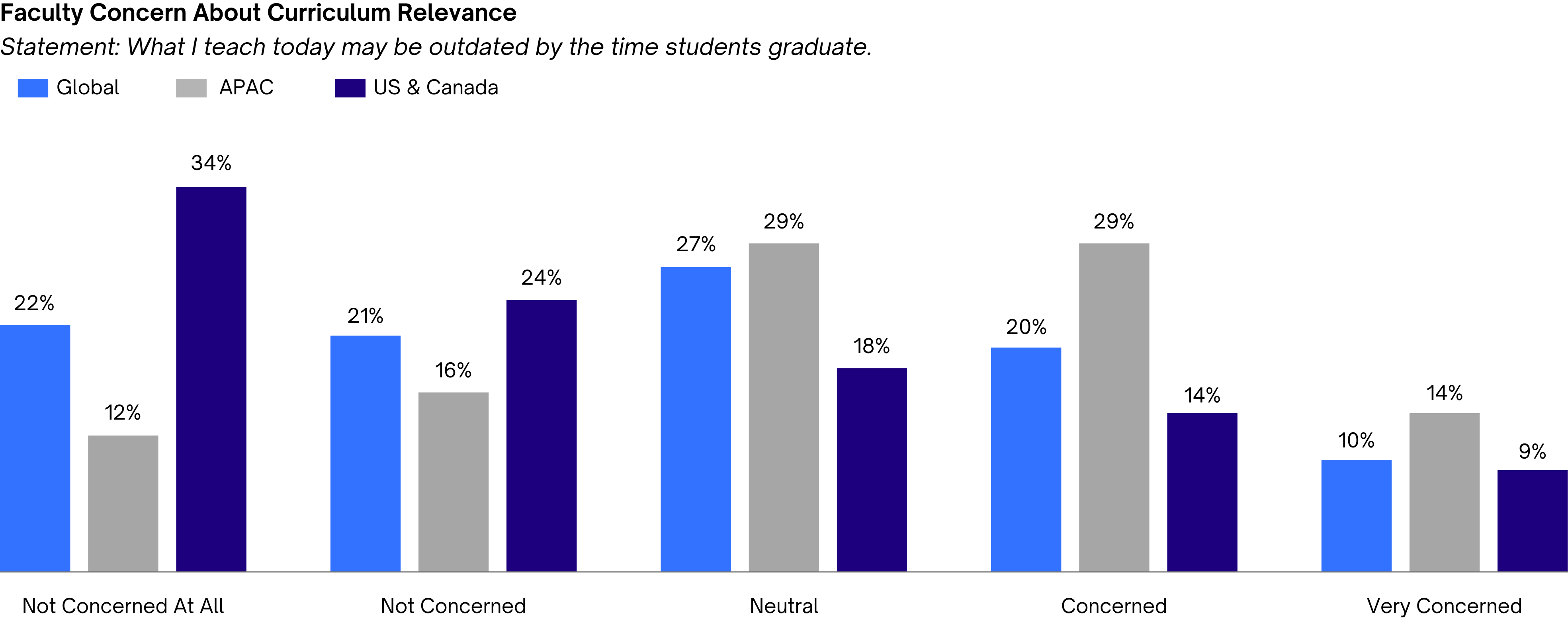
Faculty, however, are more confident than students that their teaching materials will remain relevant in the future. Globally, 43% do not worry that what they teach will be outdated by the time students graduate. Confidence is strongest in the US & Canada, where 58% say they are not worried, including 34% who say they are not worried at all. APAC faculty report the greatest pressure to adapt, with 43% believing that what they teach may be outdated by the time students graduate.
.png)

Digital Education Council

Digital Education Council

Digital Education Council

Digital Education Council
.png)
Digital Education Council

Digital Education Council


.png)
.png)


.png)
.png)
.jpeg)

.jpeg)


.jpeg)
.png)
.png)

.jpeg)